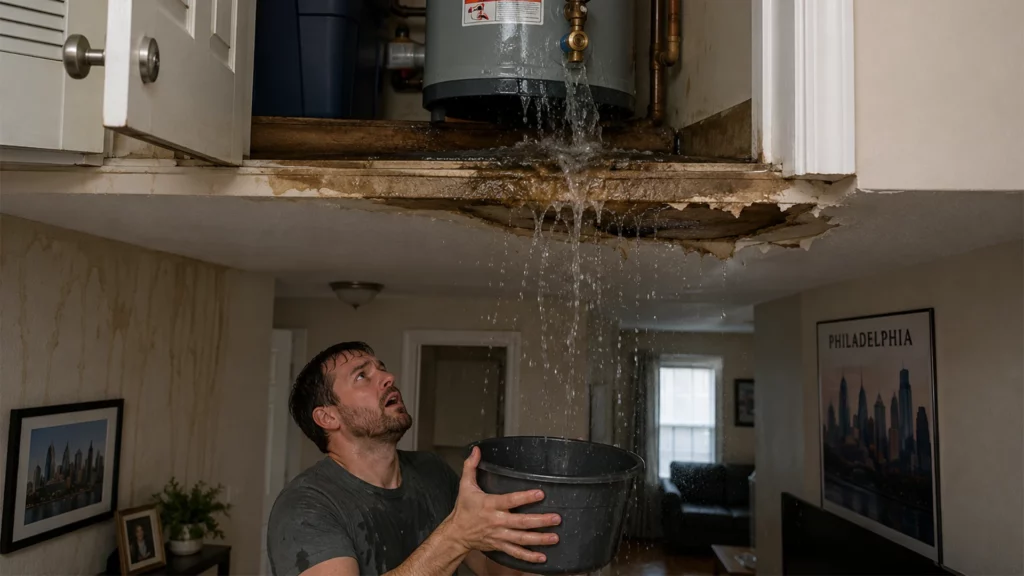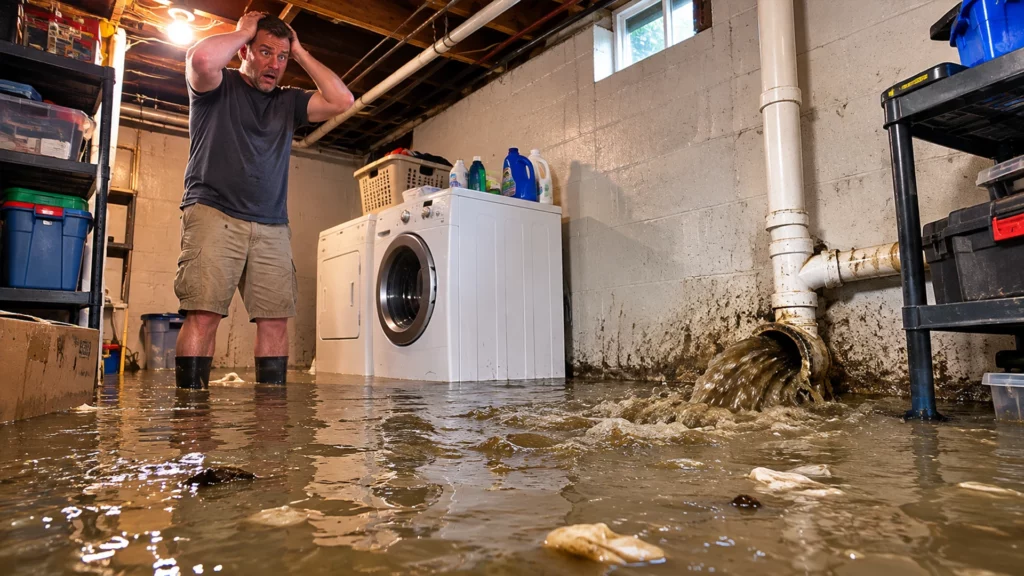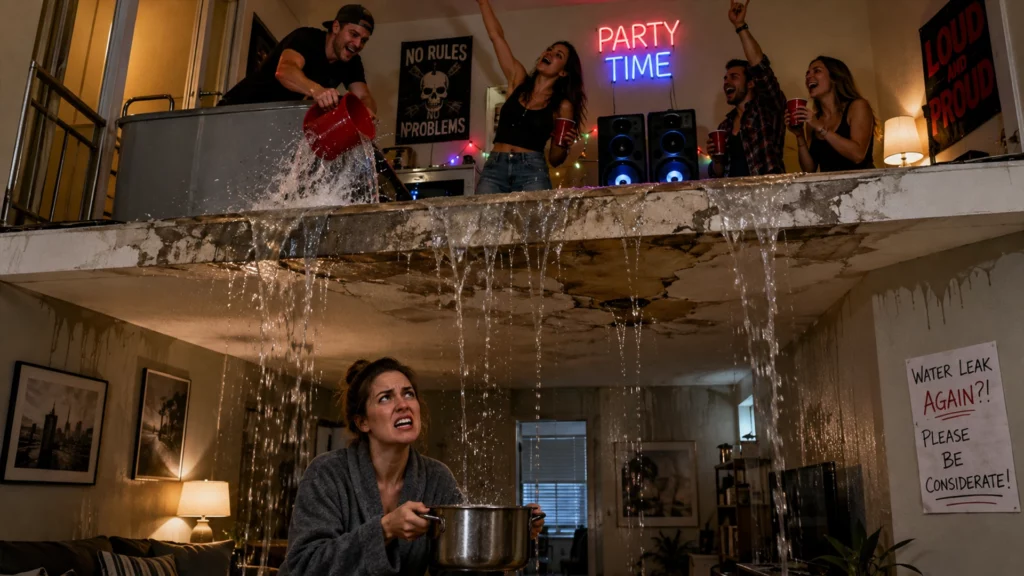

Living in an apartment or condominium building has its advantages, but water damage can quickly become a problem between neighboring units. A leaking toilet, overflowing bathtub, broken supply line, failed washing machine, or plumbing problem in an upstairs apartment can send water through the floor and into the unit below. What begins as a problem for your upstairs neighbors can become soaked ceilings, damaged drywall, wet flooring, and eventually mold growth in your home.
If an upstairs neighbor is causing water damage, the most important thing is to act quickly. Stopping the source of the water is the first priority, followed by documenting the damage and beginning professional water extraction and drying as soon as possible.
For Philadelphia residents dealing with water intrusion, Philly Damage Restoration’s mold removal and remediation services can also become important when moisture remains trapped inside walls, ceilings, floors, or other building materials.
How Can an Upstairs Neighbor Cause Water Damage?
There are many ways an upstairs apartment can cause water damage to the unit below. Some problems happen suddenly, while others develop slowly and may not be noticed until water begins appearing through the ceiling.
Common causes include:
- Burst or leaking water supply pipes
- Overflowing bathtubs and sinks
- Toilet overflows
- Washing machine hose failures
- Dishwasher leaks
- Refrigerator supply line leaks
- Clogged drains
- Failed water heaters
- Plumbing fixtures that have not been properly maintained
- Air-conditioning or HVAC condensate leaks
- Leaks around showers and tubs
- Water left running accidentally
In some cases, the upstairs resident may not even realize there is a problem. Water can travel underneath flooring or through wall cavities before appearing in the apartment below. That means the first indication of an upstairs apartment leak may be a wet ceiling, bubbling paint, a water stain, or dripping around a light fixture.
What Should You Do if Water Is Leaking From the Apartment Above?
When water is actively coming through your ceiling, treat it as an emergency. The longer water remains in building materials, the greater the potential for secondary damage.
First, notify your upstairs neighbor and your property manager or building management immediately. If the leak is coming from a fixture or appliance that can be safely shut off, the water source should be stopped as quickly as possible.
If water is near electrical outlets, light fixtures, appliances, or other electrical components, avoid touching them while standing in water. Depending on the circumstances, professional assistance may be necessary to make the area safe.
You should also take photographs and videos of the affected areas. Document wet ceilings, walls, flooring, furniture, personal belongings, and any visible source of the leak. Keep records of when you discovered the problem and when you notified the landlord, property manager, neighbor, or insurance company.
Once the source has been stopped, the next concern is removing the water and drying the affected materials.
Why Philadelphia Apartments Can Be Vulnerable to Water Damage
Water damage between apartments can be particularly disruptive in Philadelphia because the city contains a wide variety of older rowhomes, converted buildings, apartment complexes, condominiums, and multi-unit residential properties.
Older construction can contain building materials and assemblies that make it difficult to determine where water has traveled. Water from an upstairs bathroom, for example, may not simply damage the ceiling directly below the bathroom. It can migrate through flooring, framing cavities, plaster, drywall, insulation, and other concealed spaces.
Philadelphia has also experienced significant water-related incidents affecting occupied buildings. In June 2024, a water pipe break at a 14-story, 100-plus-unit apartment building on Chestnut Street displaced approximately 30 occupants, according to a Pennsylvania emergency incident report.
More recently, CBS Philadelphia reported that a private pipe was responsible for major flooding at a parking garage near 16th and Callowhill Streets in February 2026. Although that incident involved a parking garage rather than an upstairs apartment, it demonstrates how quickly a plumbing failure can introduce large amounts of water into an occupied Philadelphia property.
Read the CBS Philadelphia report on the Spring Garden flooding
These incidents are different from a typical upstairs-neighbor leak, but they illustrate an important point: once water enters a Philadelphia building, rapid response can make a major difference in the amount of resulting damage.
Water Damage Can Be Hidden Above Your Ceiling
One of the biggest problems with an upstairs apartment leak is that visible damage may represent only a portion of the moisture problem.
For example, you might see a small brown stain on your bedroom ceiling while water has actually traveled several feet inside the ceiling assembly. Water can also collect above drywall or plaster, underneath flooring, and inside wall cavities.
A ceiling may appear relatively dry on the outside while moisture remains trapped behind the surface. This is one reason professional water damage restoration can involve moisture measurements, inspection of surrounding materials, water extraction, air movement, and dehumidification.
Simply painting over a water stain does not remove the moisture that caused it.
Can an Upstairs Neighbor’s Leak Cause Mold?
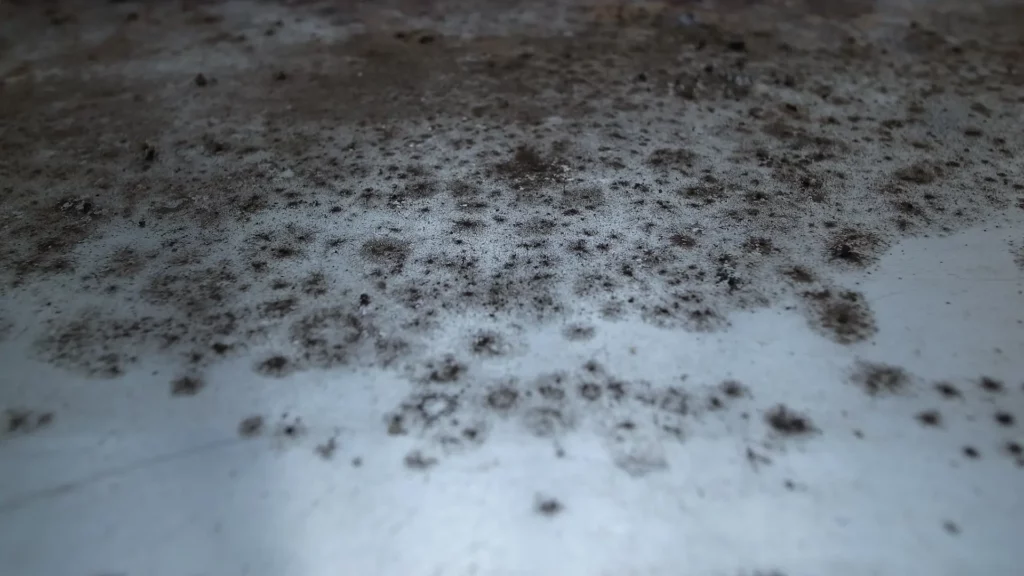
Yes. An upstairs neighbor’s water leak can create conditions that allow mold to develop in the apartment below.
Mold growth becomes a concern when porous building materials remain wet or damp. Drywall, insulation, wood, carpeting, and other materials can retain moisture after the visible water has disappeared.
This is particularly important when water enters concealed areas. A ceiling may stop dripping, but moisture could remain inside the ceiling cavity or behind the walls.
Philadelphia’s older housing stock can make this issue especially challenging because properties may contain plaster, lath, older flooring assemblies, multiple layers of construction, and renovations performed at different times. Identifying where water traveled is therefore an important part of determining the appropriate remediation strategy.
How Quickly Can Mold Develop After Water Damage?
Mold does not necessarily appear immediately after a ceiling leak. However, leaving materials damp for an extended period increases the likelihood of microbial growth.
That is why water extraction and structural drying should begin as soon as practical after an upstairs apartment leak.
Fans alone may not solve the problem if water has penetrated behind walls or into ceilings. Professional restoration equipment can help remove excess moisture and reduce humidity while technicians assess which materials can be dried and which may require removal.
If mold is already visible or a musty odor develops after the leak, the situation should be evaluated rather than simply covered with paint or household cleaners.
What If the Upstairs Neighbor Does Not Respond?
An upstairs neighbor may be away, asleep, unaware of the leak, or unwilling to cooperate. In a rental building or condominium, contact the property manager, landlord, superintendent, or emergency maintenance service as soon as possible.
The goal should be to stop the water source, not determine fault while the building is actively flooding.
If water continues entering your apartment, tell building management that there is an active water emergency and document each notification. Photographs and timestamps can be useful when communicating with management and insurance representatives later.
In multi-unit buildings, access to the apartment above may be necessary to locate and stop the source. Building management or emergency maintenance personnel may have procedures for handling these situations.
Who Pays for Water Damage Caused by an Upstairs Neighbor?
Responsibility for water damage can depend on the circumstances, the cause of the leak, the lease or condominium documents, and applicable insurance policies. A neighbor being located above you does not automatically mean that neighbor is financially responsible for every type of resulting damage.
For that reason, it is generally better not to assume who will ultimately pay while the emergency is still developing.
Instead, document the damage, notify the appropriate parties, and contact your insurance company if appropriate. Property owners, tenants, condominium associations, and landlords may have different responsibilities depending on the situation.
A restoration company can address the physical damage, but questions about liability, coverage, and reimbursement should be directed to the appropriate insurance or legal professionals.
Signs That an Upstairs Leak Has Caused Serious Water Damage
Some signs of water damage are obvious, while others can be easy to overlook.
Watch for:
- Brown or yellow ceiling stains
- Bubbling or peeling paint
- Sagging drywall or plaster
- Cracks appearing around ceiling areas
- Wet carpeting or flooring
- Warped hardwood
- Swollen baseboards
- Musty odors
- Damp walls
- Water dripping from light fixtures
- Staining around vents
- Visible mold
- Repeated ceiling stains after the upstairs neighbor uses a bathroom or appliance
A particularly important warning sign is damage that repeatedly appears in the same location. If a ceiling becomes wet whenever someone upstairs showers, runs a washing machine, or uses a plumbing fixture, there may be an ongoing leak that has not been properly corrected.
Why You Should Not Ignore a Small Ceiling Leak
A small amount of water can be misleading. A slow leak may cause more cumulative damage than a dramatic one-time spill because moisture can continue entering the building unnoticed.
For example, a leaking shower drain in an upstairs Philadelphia apartment might initially produce nothing more than a small stain below. Over time, repeated exposure to water can damage ceiling materials and surrounding structures.
Similarly, a slow plumbing leak underneath an upstairs sink can travel through flooring and walls before becoming visible in the apartment below.
If the ceiling is repeatedly getting wet, finding and correcting the source is essential. Drying the affected area without fixing the plumbing problem only treats part of the problem.
What Happens During Professional Water Damage Restoration?
Professional water damage restoration generally begins with an assessment of the affected property and the source of the water. Technicians may identify the areas affected by moisture and determine which materials can potentially be dried and which materials are too damaged to save.
Depending on the situation, restoration can include:
- Water extraction — Standing water is removed using appropriate extraction equipment.
- Moisture inspection — Technicians check affected areas for moisture that may not be visible.
- Structural drying — Air movers and dehumidification equipment help dry walls, floors, ceilings, and other materials.
- Removal of damaged materials — Materials that cannot be adequately dried may need to be removed.
- Mold assessment and remediation — If mold has developed or moisture has remained trapped, additional remediation may be necessary.
- Repairs and reconstruction — Damaged drywall, flooring, ceilings, and other components may require repair or replacement.
The exact process depends on the severity and location of the water damage.
What If the Water Damage Has Already Dried?
Even if the leak has stopped and the ceiling appears dry, there may still be hidden consequences.
Water can leave behind damaged drywall, deteriorated materials, staining, odors, and concealed moisture. If the area remained wet for an extended period, mold may also become an issue.
This is particularly relevant when a tenant discovers water damage days after an upstairs plumbing problem occurred. A property may look substantially better after surface water evaporates, while moisture remains in less visible areas.
A professional inspection can help determine whether additional drying or remediation is necessary.
Philadelphia’s Water Infrastructure Shows Why Fast Response Matters
Water emergencies are not limited to individual apartments. Philadelphia has experienced numerous water main breaks and plumbing-related incidents that have affected streets, buildings, businesses, and residents.
For example, NBC10 reported on a March 2026 water main break near Broad Street and Hunting Park Avenue that resulted in major road closures while crews responded to the leak.
Read the NBC10 Philadelphia report on the North Philadelphia water main break
These large-scale incidents are obviously different from water damage caused by an upstairs neighbor, but Philadelphia property owners and renters are familiar with how disruptive unexpected water problems can become. Inside an apartment building, the same basic principle applies: the faster the water source is stopped and the affected materials are dried, the better.
Upstairs Neighbor Causing Water Damage in Philadelphia? Act Quickly
An upstairs neighbor’s plumbing problem can quickly become your water damage problem. Whether the cause is an overflowing bathtub, failed washing machine hose, leaking toilet, broken pipe, or another plumbing failure, water can travel through ceilings and walls and create damage that is not immediately visible.
Philadelphia’s mix of older homes, rowhouses, apartment buildings, condominiums, and converted properties makes prompt attention especially important when water enters a building. A leak that appears minor from below may have affected a much larger area inside the ceiling or walls.
If your Philadelphia property has suffered water damage from an upstairs apartment, addressing the source is only the first step. The affected building materials need to be properly assessed and dried, and any resulting mold or moisture problems need to be addressed before they become a larger restoration project.
We offer 24/7 emergency restoration services for water, mold, fire, smoke, and biohazard damage throughout the Philadelphia area. When an upstairs neighbor’s leak leaves your ceiling, walls, flooring, or belongings wet, prompt professional assistance can help limit the damage and reduce the risk of long-term moisture and mold problems.