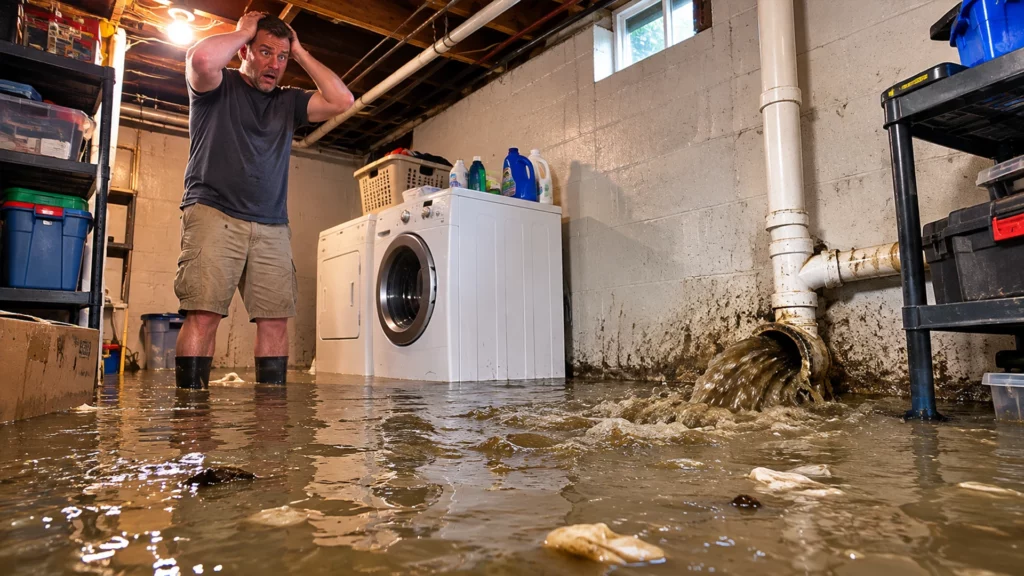

Nobody wants to discover that their Philadelphia basement has turned into a swimming pool full of sewage. Unfortunately, sewer backups can happen when wastewater has nowhere else to go, forcing contaminated water through basement floor drains, toilets, sinks, and other plumbing fixtures.
Backwater valves can help protect your basement by preventing wastewater from flowing backward through your home’s plumbing system. For Philadelphia homeowners with finished basements, older plumbing systems, or properties located in areas vulnerable to heavy rain and sewer backups, understanding how these valves work can be an important part of protecting the property from water damage and mold damage.
What Causes a Basement Sewage Backup?
A sewage backup occurs when wastewater cannot properly flow through the sewer system. Instead of continuing toward the municipal sewer, the wastewater can reverse direction and enter a home through the lowest plumbing fixtures.
Several problems can contribute to a backup, including clogged sewer lines, damaged pipes, tree roots, heavy rainfall, and overwhelmed municipal sewer systems.
Philadelphia properties can face additional challenges because the city contains many older homes and buildings with aging plumbing infrastructure. Rowhomes and other densely packed properties may also have plumbing configurations that make a sewer problem particularly disruptive.
When the basement is the lowest point in the house, wastewater often finds its way there first.
What Is a Backwater Valve?
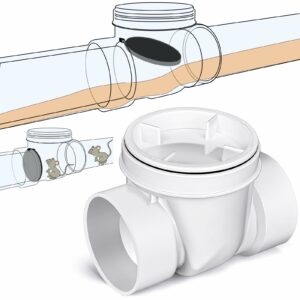
A backwater valve is a plumbing device designed to stop wastewater from flowing backward into a building.
The basic concept is relatively simple. Under normal conditions, wastewater leaving your home can pass through the valve and continue toward the sewer. If sewage attempts to reverse direction, the valve is designed to close and block the incoming flow.
This can help prevent contaminated wastewater from entering your basement through floor drains and other connected plumbing fixtures.
Why Does Philadelphia Need Backflow Protection?
Philadelphia has a large number of older residential properties, including traditional rowhouses, twins, converted properties, and multi-family buildings. Some properties have plumbing systems that were installed decades ago and may not have the same sewer-backup protection found in newer construction.
Heavy rainfall can also put substantial pressure on sewer infrastructure. When stormwater enters the sewer system faster than the system can handle, backups can occur in vulnerable areas.
For a homeowner, the important point is that you do not necessarily need a major plumbing failure inside your house for sewage to enter your basement. A problem farther down the sewer system can potentially send wastewater backward toward your property.
A properly installed backwater valve can provide an additional layer of protection against that type of event.
How Does a Backwater Valve Work?
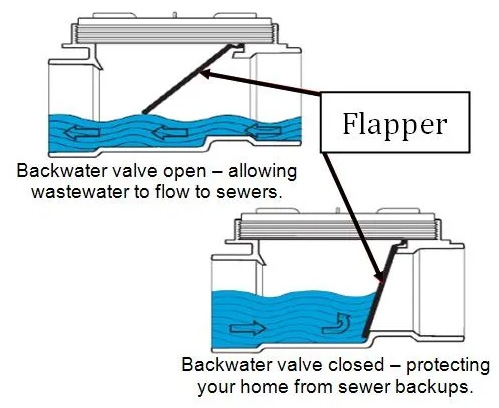
Think of a backwater valve as a one-way door for your sewer line.
When wastewater is leaving your home, the valve remains open so the water can flow toward the sewer. When wastewater tries to reverse direction, the valve closes.
This prevents the reverse flow from continuing into the house.
Some backwater valves have a visible access cover that allows the valve to be inspected and serviced. Keeping the valve accessible is important because debris, grease, sediment, and other material can interfere with its operation.
A backwater valve is not simply something that can be installed and forgotten. Like other plumbing components, it should be inspected and maintained according to the manufacturer’s recommendations and the requirements of the local plumbing system.
What Happens Without a Backwater Valve?
Without adequate backflow protection, a sewer backup can turn a basement into a major sanitation problem surprisingly quickly.
Sewage-contaminated water can spread across basement floors and soak into carpeting, furniture, drywall, insulation, stored belongings, and other porous materials. The longer contaminated water remains inside the property, the more difficult the cleanup can become.
Sewage is also fundamentally different from a clean-water plumbing leak. Wastewater can contain bacteria, viruses, organic matter, and other contaminants. That means homeowners should not treat a sewage backup like an ordinary basement puddle.
The cleanup may require professional extraction, removal of contaminated materials, cleaning, disinfection, drying, and potentially additional restoration work.
Basement Floor Drains Can Become an Entry Point
One reason basement sewage backups can be particularly unpleasant is that wastewater may enter through plumbing fixtures you normally think of as harmless.
A basement floor drain, for example, provides a direct connection to the home’s drainage system. Under normal circumstances, water flows into the drain and away from the house.
During a sewer backup, however, that flow can reverse.
Instead of the floor drain removing water from your basement, wastewater can come back through the drain and spread across the floor.
This is one reason homeowners should pay attention to recurring basement drain problems, unusual odors, gurgling sounds, slow drains, or water appearing around basement plumbing fixtures.
Signs Your Basement May Be Vulnerable to Sewer Backups
Your property may deserve closer attention if you have experienced any of the following:
- Sewage coming out of a basement floor drain
- Water backing up from a basement toilet
- Recurring basement drain clogs
- Gurgling sounds from toilets or drains
- Sewage odors in the basement
- Slow-draining basement fixtures
- Water appearing around floor drains after heavy rain
- Previous sewer backups
- An older sewer connection
- A basement located below the level of the street sewer
- Plumbing problems that repeatedly occur during major storms
A history of previous backups is particularly important. If sewage has already entered your basement, it is worth determining why it happened rather than simply cleaning up the mess and waiting for the next one.
Can Heavy Rain Cause a Philadelphia Basement Sewer Backup?
Yes. Heavy rainfall can contribute to sewer problems by introducing large quantities of water into drainage systems.
Philadelphia has experienced numerous significant rain events and flooding incidents over the years. In August 2021, for example, Hurricane Ida produced severe flooding throughout the Philadelphia region, overwhelming drainage systems and causing widespread property damage.
Although not every sewer backup is caused by rainfall, major storms demonstrate why homeowners should consider how their properties will handle large amounts of water.
A backwater valve addresses a specific part of the problem: preventing wastewater from flowing backward through a protected sewer connection. It does not prevent every type of basement flooding.
That distinction is important.
A Backwater Valve Is Not a Sump Pump
Homeowners sometimes confuse backwater valves with sump pumps, but they solve different problems.
A sump pump removes groundwater or accumulated water from a sump pit and pumps it away from the home.
A backwater valve is designed to prevent wastewater from flowing backward through a sewer or drainage connection.
You may need one, the other, or both depending on how your property is constructed and what type of water problems it experiences.
For example, a basement could have groundwater seepage during heavy rain while also being vulnerable to a sewer backup. Installing a sump pump would not necessarily stop sewage from coming through a floor drain, just as a backwater valve would not pump groundwater out of a basement.
Will a Backwater Valve Prevent Every Basement Flood?
No.
A backwater valve is designed to address sewer or wastewater backflow. It cannot stop water from entering through basement walls, foundation cracks, windows, doors, roof drainage problems, or other pathways.
It also cannot fix a broken water pipe inside your home.
This is why basement waterproofing and flood prevention often require several different strategies. Depending on the property, homeowners may need appropriate grading, functioning gutters and downspouts, sump pump protection, foundation drainage, plumbing maintenance, and sewer-backflow protection.
Why Installation Should Be Done Properly
A backwater valve needs to be installed in an appropriate location and configured correctly for the property’s plumbing system.
Improper installation can create additional plumbing problems or prevent the valve from functioning as intended.
A qualified plumber can determine whether a backwater valve is appropriate, where it should be installed, and what local plumbing requirements apply to the property.
Philadelphia homeowners should also check applicable city requirements and obtain any necessary permits before making significant modifications to their sewer or drainage plumbing.
Don’t Ignore a Sewer Backup Just Because the Water Is Gone
If your basement has already experienced a sewage backup, removing the visible water does not necessarily mean the problem is resolved.
Sewage can contaminate porous materials and leave behind bacteria, odors, and organic material. Water can also become trapped underneath flooring, inside walls, or in other difficult-to-reach areas.
Carpet padding, drywall, insulation, and other porous materials may need to be removed if they have been contaminated.
The basement should also be thoroughly cleaned, disinfected, and dried. Depending on the severity of the incident, professional sewage cleanup and water damage restoration may be appropriate.
What Should You Do During a Basement Sewage Backup?
If sewage is actively backing up into your basement, avoid unnecessary contact with the water.
Keep children and pets away from the affected area, and be especially careful around electrical equipment and outlets. Do not assume that contaminated water is safe simply because it appears relatively clean.
If possible, stop using plumbing fixtures until the cause of the backup has been identified. Contact a plumber or sewer professional to address the source of the problem.
After the source has been controlled, contaminated water and damaged materials should be addressed promptly.
The faster sewage is removed and the affected areas are cleaned and dried, the better the chances of limiting additional damage.
Prevention Is Much Better Than Cleaning Up Sewage
A backwater valve may not be the most exciting home improvement project, but it can become extremely valuable when wastewater starts moving in the wrong direction.
Imagine coming downstairs after a major storm and discovering that sewage has pushed through the basement floor drain. Instead of dealing with a small plumbing repair, you could suddenly be dealing with contaminated flooring, damaged belongings, ruined drywall, unpleasant odors, and an extensive restoration project.
Preventing that scenario is much easier than cleaning it up afterward.
For Philadelphia homeowners, especially those with older properties and basements, sewer-backflow protection is worth discussing with a qualified plumbing professional.
What If Your Philly Basement Already Became a Poop Swimming Pool?
Unfortunately, a backwater valve cannot go back in time.
If sewage has already entered your Philadelphia basement, the priority is containing the contamination, removing the wastewater, cleaning affected surfaces, and drying the structure.
Philly Damage Restoration provides 24/7 emergency restoration services for water damage, sewage damage, mold, fire, smoke, and biohazard situations throughout the Philadelphia area.
Professional restoration can help determine what materials have been affected and what needs to be cleaned, dried, removed, or replaced.
And once the immediate disaster has been handled, talk to a qualified plumber about why the backup happened and whether installing or servicing a backwater valve could help protect your basement in the future.
Because when it comes to Philadelphia basements, the best poop swimming pool is the one you never have to clean up.