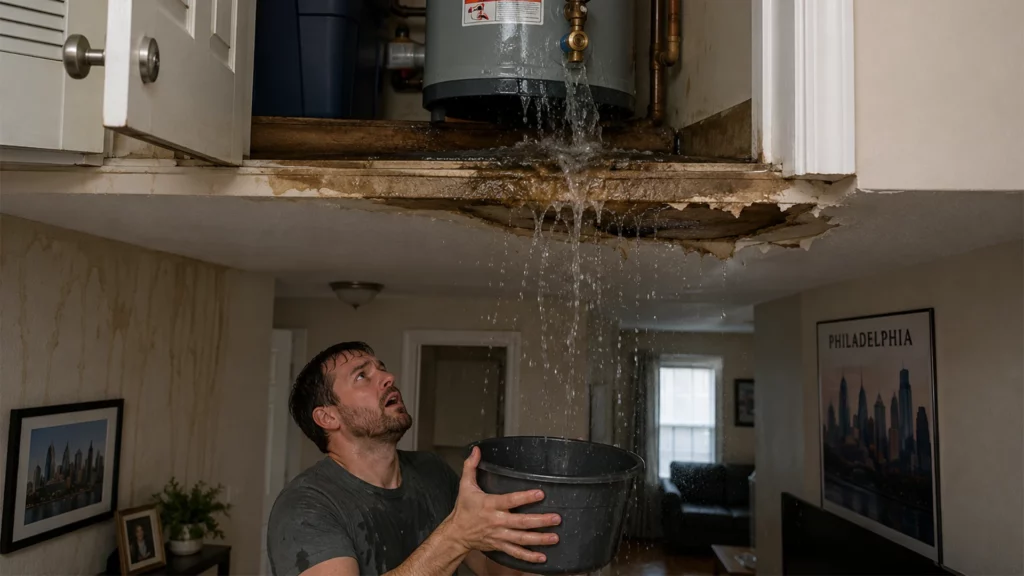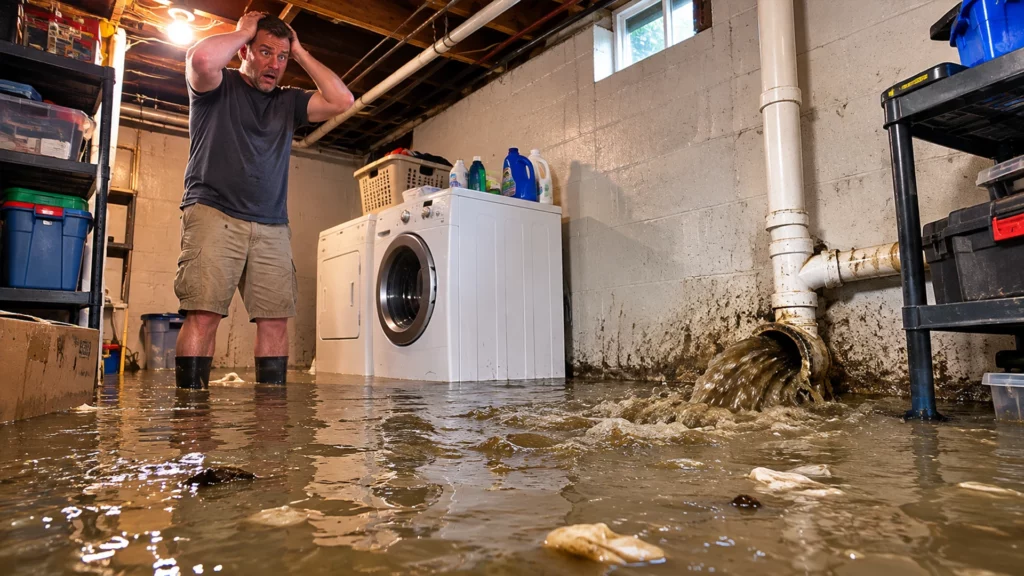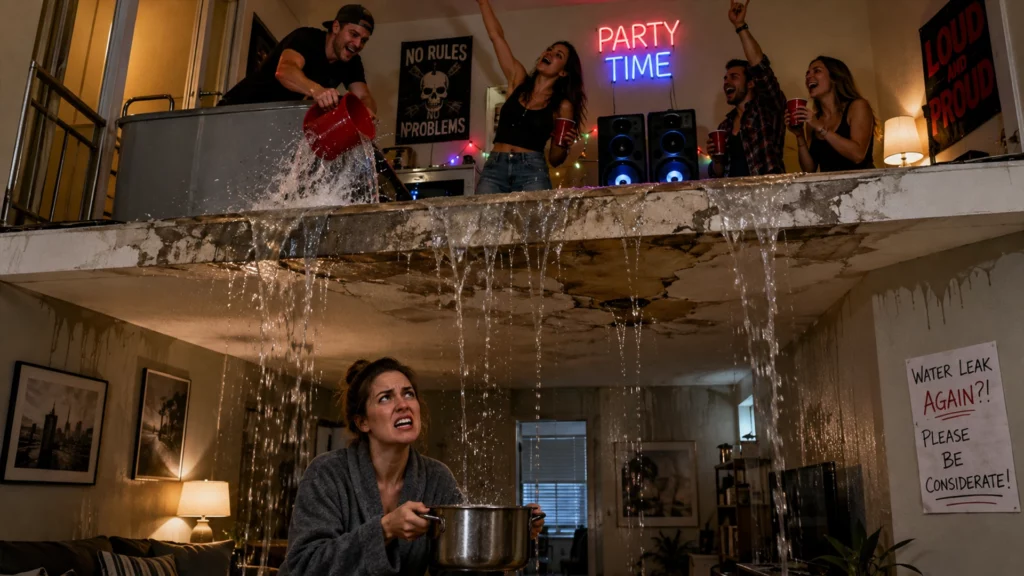

An upstairs neighbor’s leaking water heater can quickly turn into a major water damage problem for the apartment or home below. A failed water heater can release a substantial amount of water in a short period, allowing it to travel through ceilings, walls, flooring, electrical fixtures, and other building materials. And if no action is taken to address the issue, over time water damage can create the conditions for mold growth, requiring mold removal.
This situation can be especially challenging in Philadelphia, where many properties are older row homes, apartment buildings, townhouses, and multi-family structures with shared walls, floors, and ceilings. Water from an upper-floor plumbing failure can move through the building and cause damage far away from the original leak.
If water is coming through your ceiling or walls because an upstairs neighbor’s water heater has failed, the priority is to protect people, limit additional damage, and get the leak stopped as quickly as possible.
Shut Off Electricity in the Affected Area
If water is coming through the ceiling near electrical outlets, light fixtures, switches, appliances, or wiring, treat the situation as an electrical hazard.
Do not touch wet electrical fixtures or stand in standing water while attempting to operate electrical equipment. If it is safe to do so, turn off power to the affected area from the electrical panel. If you cannot safely access the panel or determine which circuit is affected, contact a qualified electrician or emergency professional.
Water can travel through ceilings and walls in ways that are not immediately visible, meaning electrical components may be wet even when they do not appear damaged.
Contact Your Upstairs Neighbor Immediately
If you know the neighbor whose water heater is leaking, contact them as quickly as possible.
They may be able to shut off the water supply to the water heater and prevent additional water from entering the building. If the leak is severe, the neighbor may also need to shut off the property’s main water supply.
In an apartment or condominium building, contact the property manager, landlord, superintendent, or building emergency maintenance service as well.
The faster the water source is stopped, the less opportunity there is for water to spread through the structure.
Don’t Go Upstairs if It Is Unsafe
You may be tempted to go upstairs and investigate the water heater yourself, but don’t enter another unit without permission or put yourself in danger.
A leaking water heater can create slippery floors, electrical hazards, collapsing ceiling materials, and other risks.
If you can reach the neighbor safely, ask them to contact their landlord or emergency maintenance service. In a multi-unit building, building management may have procedures for dealing with plumbing emergencies.
Protect Your Belongings
Once the immediate water source has been addressed, move furniture, electronics, clothing, and other belongings away from the affected area if it is safe to do so.
Place containers beneath active drips when appropriate, but don’t place yourself beneath a sagging or severely damaged ceiling.
If water is coming through a ceiling, avoid storing valuable belongings directly underneath it. Water can continue accumulating above the ceiling even after the visible leak appears to slow down.
Take photographs and videos of damaged belongings before moving them whenever possible.
Be Careful Around a Sagging Ceiling
A ceiling that has absorbed a significant amount of water can become extremely heavy.
If drywall or plaster is sagging, bubbling, cracking, or separating from the ceiling structure, stay clear of the area. A heavily saturated ceiling can potentially collapse without much warning.
Do not puncture or cut into a sagging ceiling unless the situation is being handled by someone qualified to do so.
Philadelphia has many older homes and buildings that contain plaster ceilings and older construction materials. Water damage in these structures can behave differently from damage in newer drywall construction, making professional assessment particularly useful.
Document the Water Damage
Take photographs and videos as soon as it is safe.
Document:
- Water coming through the ceiling
- Ceiling stains
- Sagging drywall or plaster
- Wet walls
- Damaged flooring
- Wet furniture
- Damaged electronics
- Damaged personal belongings
- Water around light fixtures or outlets
- Any visible source of the leak
Also record when you first noticed the water and when the upstairs neighbor or property manager was notified.
This documentation can become important when dealing with landlords, property managers, condominium associations, insurance companies, or other parties responsible for the damage.
Notify Your Landlord or Property Manager
If you’re renting, notify your landlord or property manager immediately.
Even if the leak originated in another apartment, water may have damaged your rental unit. The property owner or management company may need to arrange emergency repairs, water extraction, drying, and structural repairs.
Put the notification in writing when possible. A text message or email creates a record of when the problem was reported.
If you live in a condominium or managed apartment building, follow the building’s emergency maintenance procedures.
Contact Your Insurance Company
If your belongings or the interior of your unit have been damaged, contact your renters or homeowners insurance company and explain what happened.
The insurance company may want photographs, documentation, estimates, or information about the source of the water.
Coverage depends on the circumstances and the specific policy. Don’t assume that the fact that the water came from another apartment automatically determines which insurance policy will pay for the damage.
If you’re unsure what coverage applies, ask your insurance company to explain the claims process and what documentation they need.
Determine What Caused the Water Heater Leak
A water heater can leak for several different reasons.
Common causes include:
- A failed tank
- A leaking drain valve
- A failed pressure relief valve
- A loose plumbing connection
- A failed supply line
- Corrosion
- A damaged water heater fitting
- A faulty installation
- A ruptured tank
Determining the cause can be important because the repair needed to stop the leak is different from the restoration work required to repair the resulting water damage.
The water heater itself may need to be repaired or replaced by a qualified plumber.
Start Water Extraction as Quickly as Possible
Once the leak has stopped, standing water should be removed promptly.
Water can soak into:
- Carpeting
- Hardwood flooring
- Subflooring
- Drywall
- Plaster
- Baseboards
- Cabinets
- Insulation
- Furniture
The longer these materials remain wet, the greater the potential for additional damage and microbial growth.
Professional water damage restoration companies use extraction equipment, air movers, dehumidifiers, and moisture meters to remove water and monitor the drying process.
Check for Hidden Water Damage
One of the biggest problems with an upstairs water heater leak is that visible damage may represent only a small portion of the actual problem.
Water can travel through ceiling cavities and wall assemblies before appearing inside the room below.
For example, water from an upstairs water heater could travel through the flooring of the upper apartment, into the ceiling cavity below, and then spread sideways before eventually appearing as a stain several feet away from the original leak.
Moisture can also become trapped beneath flooring or inside walls.
A professional moisture assessment can help identify areas that need additional drying.
Dry the Affected Materials
Removing standing water is only the beginning.
Building materials need to be thoroughly dried to reduce the risk of long-term damage and mold growth.
Professional restoration may involve:
- Commercial air movers
- Dehumidifiers
- Moisture meters
- Water extraction equipment
- Controlled airflow
- Removal of saturated materials
The goal is to return affected materials to an appropriate moisture condition rather than simply waiting for them to appear dry on the surface.
Watch for Mold Growth
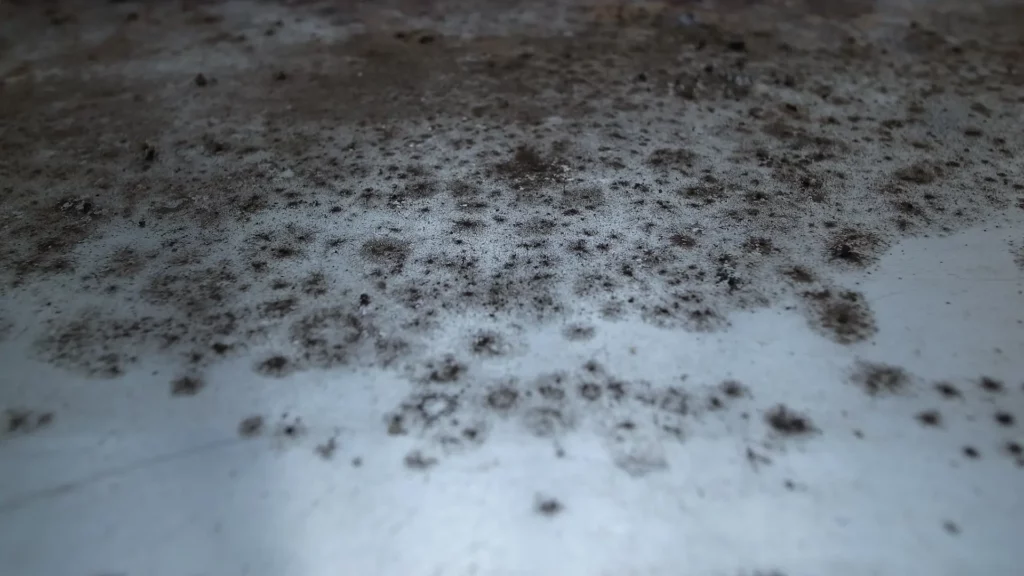
Water damage can create favorable conditions for mold growth, particularly when drywall, insulation, wood, carpeting, and other porous materials remain damp.
This can be especially important in Philadelphia during warm and humid weather.
Mold may develop in concealed locations such as:
- Inside walls
- Above ceilings
- Beneath flooring
- Behind baseboards
- Inside cabinets
- Around plumbing penetrations
If a significant amount of water entered the building, don’t assume that the absence of visible mold means there is no moisture problem.
Don’t Just Paint Over Water Stains
Once the ceiling dries, you may be tempted to cover the stain with paint.
Painting may improve the appearance, but it doesn’t necessarily address the damage underneath.
Before repairing and repainting a water-damaged ceiling, the affected materials should be evaluated to determine whether they are dry and structurally sound.
If drywall, insulation, or other porous materials have sustained significant damage, they may require removal and replacement.
Consider the Type of Water Involved
A leaking water heater generally involves clean water from the building’s plumbing system, but the condition of the affected building materials can change the situation.
For example, if the water has mixed with sewage, entered a contaminated area, or remained stagnant for an extended period, additional precautions may be necessary.
Tell the restoration company where the water originated and whether it may have contacted other contaminants.
Philadelphia Apartment Buildings Can Make Water Damage Worse
Philadelphia has many multi-unit buildings where apartments share floors, ceilings, plumbing systems, and structural components.
A water heater failure on an upper floor can therefore affect multiple units.
In an older Philadelphia row home converted into apartments, for example, water may travel between floors through older flooring assemblies, plaster ceilings, wall cavities, and plumbing penetrations.
Apartment buildings and condominiums may also have building-wide responsibilities involving common areas and shared infrastructure.
That’s why communication with property management is particularly important when water crosses from one unit into another.
What About Philadelphia Row Homes?
Philadelphia row homes are especially susceptible to cascading water damage because of their narrow layouts and vertically stacked living spaces.
A water heater located in an upper-floor utility area can release water that travels downward through ceilings and floors.
Older row homes may also contain plaster, hardwood flooring, masonry, and other materials that require specialized restoration approaches.
If your Philadelphia row home experiences water damage from an upstairs plumbing failure, don’t assume the visible ceiling stain represents the entire affected area.
Prevent Further Damage After the Leak
Once the water source has been stopped, focus on preventing additional damage.
If it is safe:
- Move belongings away from wet areas
- Remove standing water
- Increase airflow
- Use dehumidification
- Keep people away from unsafe areas
- Avoid using affected electrical equipment
- Document the condition
- Contact appropriate professionals
Don’t attempt repairs that could put you at risk or make structural or electrical damage worse.
When to Call a Water Damage Restoration Company
Professional water damage restoration is particularly important when a water heater has released a large amount of water.
Consider calling a professional if:
- Water has soaked the ceiling
- Drywall is saturated
- Flooring is wet
- Water entered walls
- Insulation is affected
- Multiple rooms are damaged
- Water reached electrical components
- There is standing water
- The leak continued for an extended period
- You notice a musty smell
- Mold begins appearing
Professional restoration can help identify hidden moisture and begin drying before secondary damage develops.
What Philly Damage Restoration Can Do
Philly Damage Restoration provides 24/7 emergency water damage restoration services throughout Philadelphia and surrounding areas.
When an upstairs water heater fails, our team can respond to the resulting water damage by extracting standing water, evaluating affected materials, drying the property, and addressing areas where moisture has become trapped.
Our technicians can help with water damage involving Philadelphia row homes, apartments, condominiums, townhouses, commercial properties, and other buildings.
Fast response is particularly important after a water heater failure because a large volume of water can enter a property in a short period. The sooner the water is extracted and affected materials are dried, the better the chance of limiting additional damage.